
Blog
THE POWER OF OMEGA-3: WHY HEALTHY FATS MATTER IN YOUR DAILY DIET

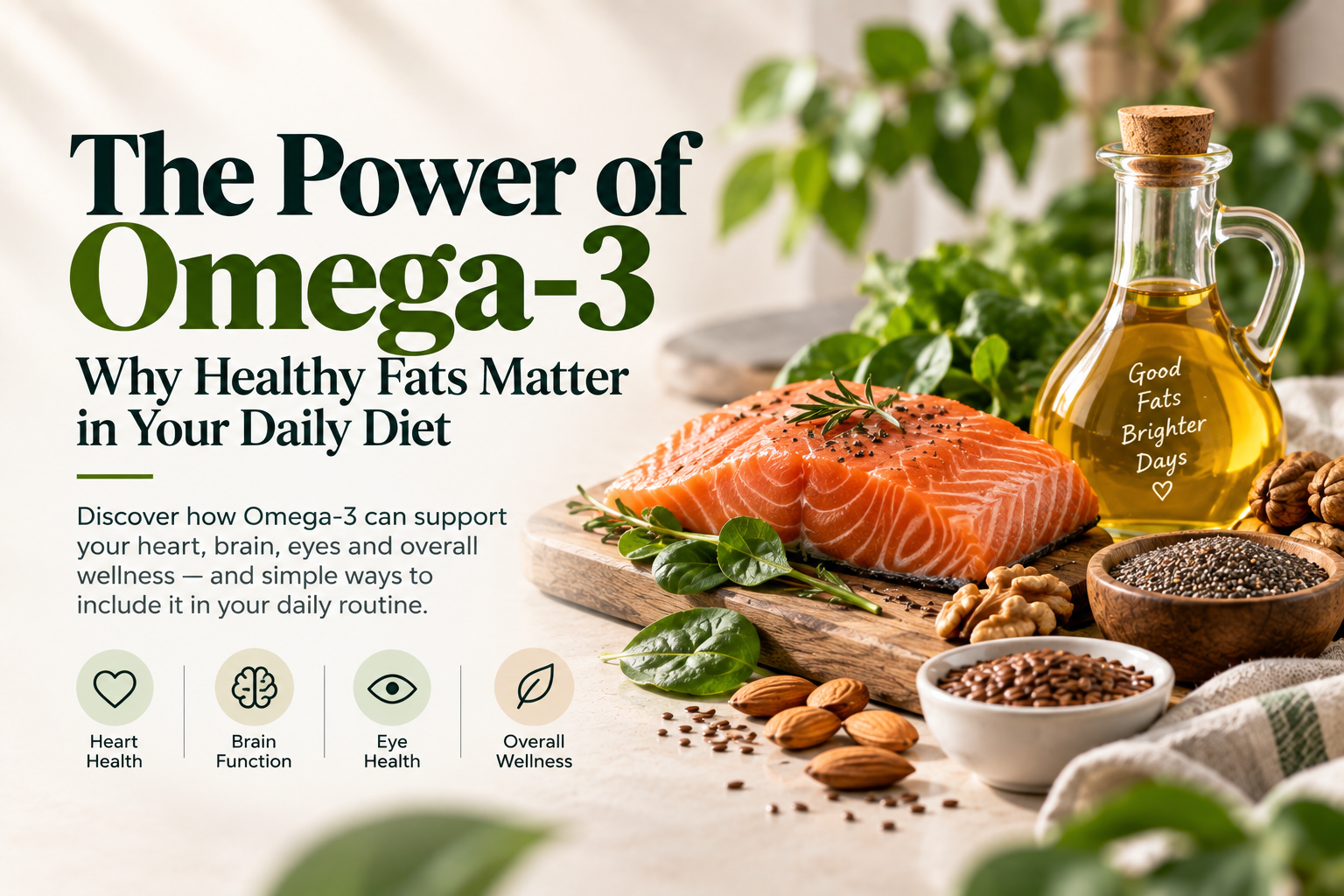
Not all fats are the same.
While some types of fat are best limited, healthy fats are an important part of a balanced diet. Among them, Omega-3 fatty acids are widely recognized as important nutrients that play a role in overall health and well-being.
From supporting heart health to contributing to normal brain and eye function, Omega-3 can be an important part of a nutritious lifestyle.
Let’s understand what Omega-3 is, where you can find it, and why it deserves a place in your daily wellness routine.
WHAT ARE OMEGA-3 FATTY ACIDS?
Omega-3 fatty acids are a group of essential fats that your body needs for various normal functions.
The main types commonly discussed are:
- EPA (Eicosapentaenoic Acid)
- DHA (Docosahexaenoic Acid)
- ALA (Alpha-Linolenic Acid)
EPA and DHA are commonly found in certain fish and seafood, while ALA is found mainly in plant-based foods such as flaxseeds, chia seeds, and walnuts.
Because the body cannot produce enough essential fatty acids on its own, getting them through your diet is important.
WHY ARE OMEGA-3 FATS IMPORTANT?
Omega-3 fatty acids are involved in several important functions throughout the body.
A balanced diet containing Omega-3 sources may support:
- Heart health
- Brain health
- Eye health
- Normal cellular function
- Overall nutritional wellness
However, Omega-3 is only one part of a healthy lifestyle. A varied diet, regular exercise, good sleep, and other healthy habits remain equally important.
- SUPPORTS HEART HEALTH
A healthy heart is an important foundation for overall well-being.
Omega-3 fatty acids, particularly EPA and DHA, have been widely studied for their relationship with cardiovascular health.
Including Omega-3-rich foods as part of a balanced diet can be one way to support a heart-conscious lifestyle.
HEART-HEALTHY HABIT:
Combine nutritious foods with regular physical activity, healthy weight management, adequate sleep, and routine health check-ups.
- SUPPORTS BRAIN & MENTAL WELLNESS
The brain contains a significant amount of fat, making healthy dietary fats an important part of good nutrition.
DHA is particularly important for normal brain structure and function.
Including sources of healthy fats in your diet can therefore contribute to a well-rounded nutritional routine.
Remember:
Nutrition works best as a complete picture. Focus on a varied diet rather than relying on one nutrient alone.
- SUPPORTS EYE HEALTH
DHA is also an important structural component of the retina.
Including sources of Omega-3 in your diet can therefore be part of an overall approach to maintaining normal eye health.
Along with nutrition, remember to give your eyes regular breaks from screens and maintain regular eye check-ups when needed.
- HELPS YOU CHOOSE BETTER FATS
One of the easiest ways to improve your everyday nutrition is to pay attention to the types of fats you consume.
Consider including healthy sources such as:
- Fatty fish
- Chia seeds
- Flaxseeds
- Walnuts
- Certain plant oils
- Omega-3 supplements when appropriate
At the same time, try to limit excessive consumption of highly processed foods and unhealthy fats.
NATURAL SOURCES OF OMEGA-3
You can find Omega-3 in a variety of foods.
ANIMAL SOURCES
- Salmon
- Sardines
- Mackerel
- Other oily fish
PLANT SOURCES
- Flaxseeds
- Chia seeds
- Walnuts
- Certain plant oils
Including different sources throughout your diet can help create a more balanced nutritional pattern.
OMEGA-3 SUPPLEMENTS: WHAT SHOULD YOU KNOW?
For some people, getting enough Omega-3 through food may be difficult.
This is where supplements can sometimes become part of a wellness routine.
If you are considering an Omega-3 supplement, pay attention to:
- EPA and DHA content
- Ingredient information
- Serving size
- Quality and sourcing
- Storage instructions
- Product transparency
Always follow the serving instructions provided on the product label.
HOW TO ADD MORE OMEGA-3 TO YOUR DAILY ROUTINE
Adding healthy fats to your diet doesn’t have to be complicated.
Try these simple habits:
START WITH BREAKFAST
Add chia or flaxseeds to your smoothie, oats, or yogurt.
MAKE LUNCH NUTRITIOUS
Include vegetables, whole grains, and a healthy protein source.
CHOOSE FISH REGULARLY
If you eat seafood, include Omega-3-rich fish as part of a balanced diet.
SNACK SMART
Choose options such as walnuts instead of highly processed snacks.
CONSIDER SUPPLEMENTS RESPONSIBLY
If your diet doesn’t provide enough Omega-3, speak with a healthcare professional about whether a supplement may be appropriate for you.
WHO SHOULD BE CAREFUL WITH OMEGA-3 SUPPLEMENTS?
While Omega-3 is an important nutrient, supplements may not be suitable for everyone.
If you take blood-thinning medication, have a medical condition, are preparing for surgery, are pregnant or breastfeeding, or have any concerns about supplementation, consult a qualified healthcare professional before use.
Always follow the recommended serving and never use supplements as a replacement for prescribed medication.
BUILD A HEALTHIER PLATE
Good nutrition is about balance, variety, and consistency.
A healthy daily routine can include:
PROTEIN
Choose quality sources to support your nutritional needs.
VEGETABLES & FRUITS
Add a variety of colourful plant foods to your meals.
WHOLE GRAINS
Choose nutrient-rich whole grains where appropriate.
HEALTHY FATS
Include sources of Omega-3 and other beneficial fats.
HYDRATION
Drink enough water throughout the day.
REGULAR MOVEMENT
Stay physically active and make movement part of your routine.
THE BOTTOM LINE
Omega-3 fatty acids are an important part of a balanced diet and play a role in several normal functions throughout the body.
Whether you get them from fish, plant-based foods, or an appropriate supplement, the goal should always be the same:
BUILD A BALANCED, NUTRITIOUS & CONSISTENT LIFESTYLE.
No single nutrient can replace the benefits of healthy eating, regular movement, quality sleep, and good lifestyle habits.
MAKE BETTER FOOD CHOICES TODAY FOR A HEALTHIER TOMORROW.
Mashriqi Products
Traditional Wisdom for a Healthier Tomorrow.
DISCLAIMER
This article is intended for general educational and wellness information only. It is not intended to diagnose, treat, cure, or prevent any disease or medical condition. The information provided should not be considered a substitute for professional medical advice.
If you have a medical condition, take medication, are pregnant or breastfeeding, or are considering starting a new supplement, consult a qualified healthcare professional before use.